Cultivating Strong Foundations
All staff at The Aspire Academy are trained in the Thrive approach, with an additional focus on trauma-informed practice. Thrive equips educators with strategies and activities to help build young people’s social and emotional skills, as well as develop their ability to manage stress and take on life’s ups and downs.
The approach is underpinned by neuroscience, attachment theory and child development research and is suitable for children and young people aged 0-25 years. Schools that have adopted the Thrive Approach have reported many benefits. These include calmer classrooms with fewer disruptions, improved attendance, reduced exclusions and higher achievements.
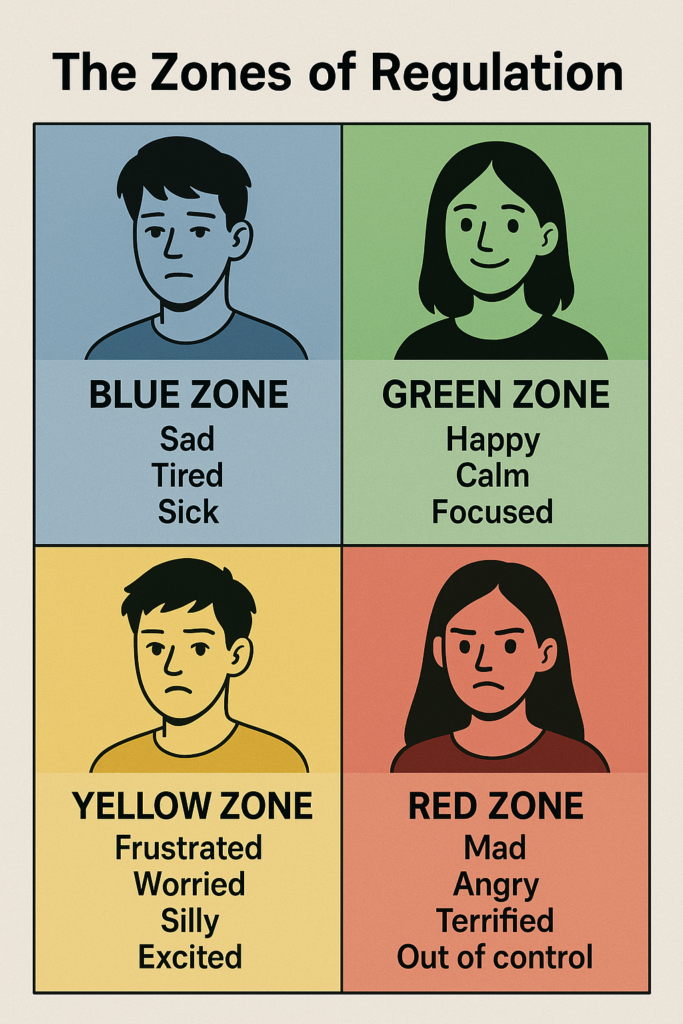
We also use The Zones of Regulation as a tool to help young people organise their feelings, states of alertness, and energy levels into four colored Zones – Blue, Green, Yellow, and Red. We find that the simple, common language and visual structure of The Zones of Regulation helps make the complex skill of emotional regulation more concrete for learners and those who support them.
Mental Health Provision
The Aspire Academy provides a tiered approach to mental health and wellbeing support, categorized into universal, targeted, and specialist interventions:
Universal Support:
- Curriculum Integration: We offer a robust PSHE and RSE curriculum that explicitly teaches young people how to look after their mental health. In addition, all pupils receive dedicated lessons in Wellbeing (at KS3) and Mental Health Awareness (at KS4), providing psychoeducation and experiential learning around life skills and coping strategies.
- Home/School Partnership: Our emphasis on attendance, punctuality, healthy relationships, and fostering a love of learning helps support positive mental health for all pupils.
- Staff Involvement: All staff share responsibility for the mental health of our pupils and work within a mental health framework informed by neuroscience, attachment theory, and child development research.
- General Support: Pupils benefit from a wide range of supportive activities and systems, including assemblies, breakfast club, lunch clubs, sensory spaces, time-out cards, flexible learning spaces, peer support programs, pupil passports, and behaviour support plans.
Targeted Support:
- Group Interventions: Targeted group support is provided through Purple Leaf, STEPS/Catch 22, and Cranstoun Here4YOUth. These programmes address social, emotional, and mental health needs through structured sessions delivered in school.
- Individual Interventions: Selected pupils receive 1:1 SEMH interventions focused on developing effective coping strategies. These are informed by Thrive and Zones of Regulation approaches and are delivered by our in-school Mental Health Team. In addition, Jane Bailey from Dragonfly Wellbeing provides counselling and wellbeing sessions in school to support pupils with emotional difficulties, anxiety, trauma, and self-esteem.
- Specific Programs: Some pupils benefit from twilight or parallel pathway support programs, designed to reduce emotion-based school avoidance and anxiety through adapted timetables and environments.
- Family and Readmission Support: Tailored support is offered to families and students following suspensions or other absences.
Specialist Support:
- CAMHS WEST (Education Mental Health Practitioner): Pupils referred to CAMHS WEST may receive 6–8 sessions of Cognitive Behavioural Therapy (CBT), delivered individually on-site. These interventions support low-level mental health concerns and require parental consent.
- FASST (Family and Adolescent Support Services Team): The FASST Team works with both pupils and families to offer more intensive emotional, behavioural, and practical support, helping to create a consistent and supportive home-school environment.
- Malachi: Malachi provides therapeutic family support to improve communication, rebuild relationships, and reduce conflict within families. This work complements the support pupils receive in school and ensures a holistic approach.
- External Specialist Referrals: Some pupils may require referral to external agencies for bespoke assessment and intervention. These may include CAMHS (Tier 2 & 3), Women’s Aid, WMRSASC, Cranstoun, or Footsteps Bereavement.
- Bespoke Programs: For pupils with complex needs, tailored therapeutic opportunities such as outdoor therapy, walk-and-talk sessions, or time at Longlands Farm may be offered as part of a personalised support plan.
Tiered Approach to Mental Health and Wellbeing at The Aspire Academy